6.5 Grendel AKs
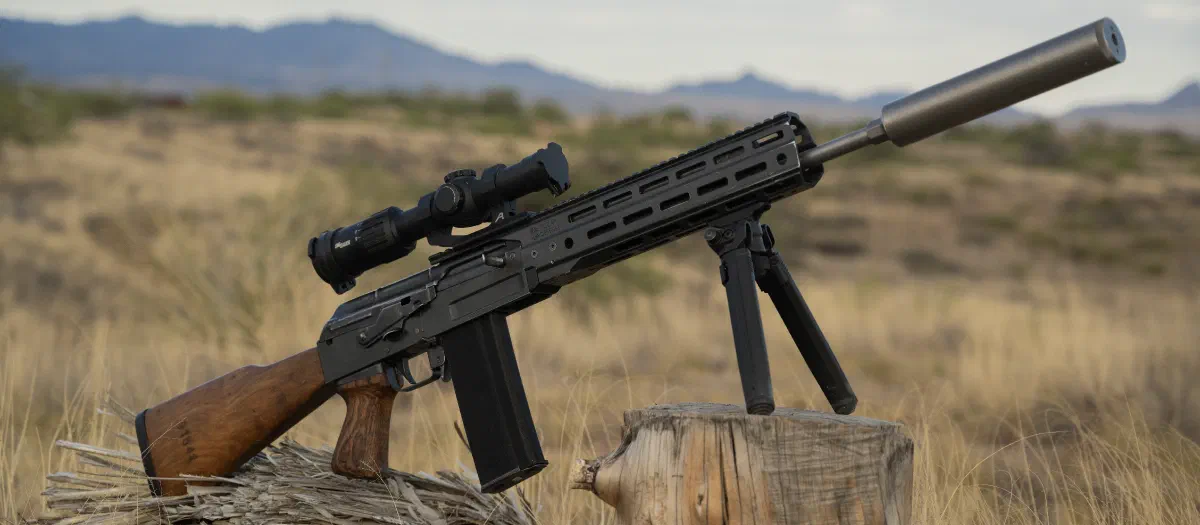
My line of 6.5 Grendel AKs comes from dissatisfaction with the (admittedly very limited) number of commercial options available to the consumer. Most seem constructed as novelties or are an inadequate hodgepodge of components and processes (like the 6.5 Grendel VEPRs) rather than practical weapons leveraging of innate advantages of the 6.5 Grendel cartridge in the AK platform. And there are many:
-
The AK platform was built, from the ground up, to accommodate a case head of this size. 7.62x39 was the predecessor to 6.5 Grendel and shares a case head and bolt geometry. Unlike ARs, there is no compromise to get 6.5 into this system.
-
Correction as of 06OCT2026 - the new versions of the CSSpec magazines are feeding adequately with S&B brass, and I’m no longer having any issues. With that, the one real headache with this platform is solved. I’m keeping any other notes intact for posterity, but bear in mind that the below listed complaints on magazine performance are no longer well-founded AK magazines, magwell, and feed geometry were built for this size case head. The options for feeding 6.5G into your AR are notoriously inadequate, and while the commercial AK 6.5G magazines do need tuning to get them running right, they are far more reliable than available AR 6.5G magazines when adjusted. My scratch-built 3D-printed body exchanges a bit of durability for truly perfect feed geometry. While not as intrinsically bulletproof as metal-reinforced magazines, when printed well, these will happily compete with the translucent WBP magazines in holding up to long-term abuse.
-
6.5 is a great, flat-shooting, intermediate cartridge and a significant upgrade over 7.62x39. There is no capacity loss when moving from one to the other, and while the AK by its nature isn’t consistently capable of 1MOA like many of the more accurate AR-15s are, all of my 6.5 AKs hold 1.5MOA with Hornady Black as a rule–more than sufficient for an autoloading service rifle. This isn’t a sniper system, but it’s not supposed to be–it’s an infantry rifle with far better ballistics than your average 7.62 AK.
So, in theory, it’s a great idea–let’s take a look at what I do to make this a great system in practice.
BARREL
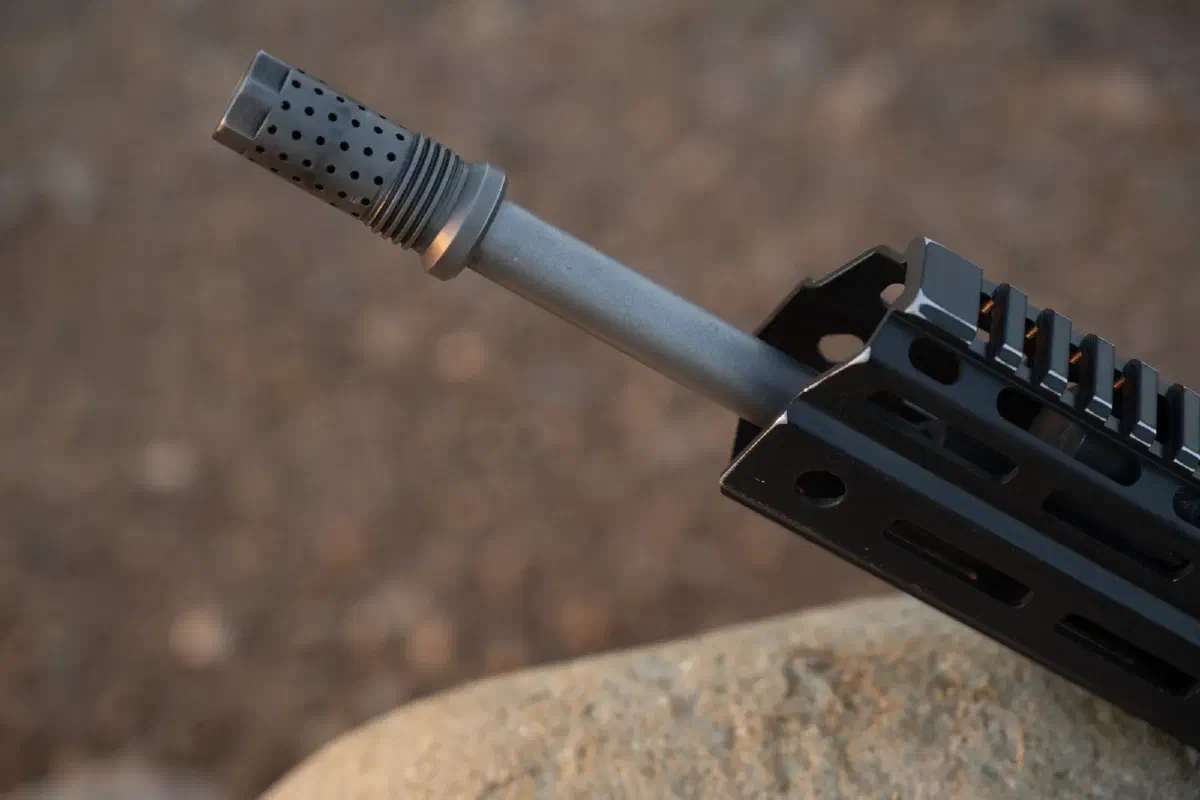
All barrels are turned and chambered from Lothar Walther blanks. These can be stainless, bare chromoly, or nitrided, depending on customer preference. These are fantastic blanks without getting into the territory of diminishing returns on some of the pricier blanks. When built into my AKs, these will happily hold 1MOA with match ammo, and 1.5-2MOA with standard ball.
BOLT
6.5G and 7.62x39 share a bolt face–so no changes needed, right? Almost–many AKs have a very large firing pin, and a correspondingly very large firing pin hole. The firing pin also extends much further than most AR pins will. This creates a situation where soft commercial primers are both inadequately supported and smacked far harder and deeper than their design calls for, causing failure. While I could have advised customers to simply load with hard primers and stick to the Russian steel cased, this completely negates the vision of this system as a practical infantry weapon. 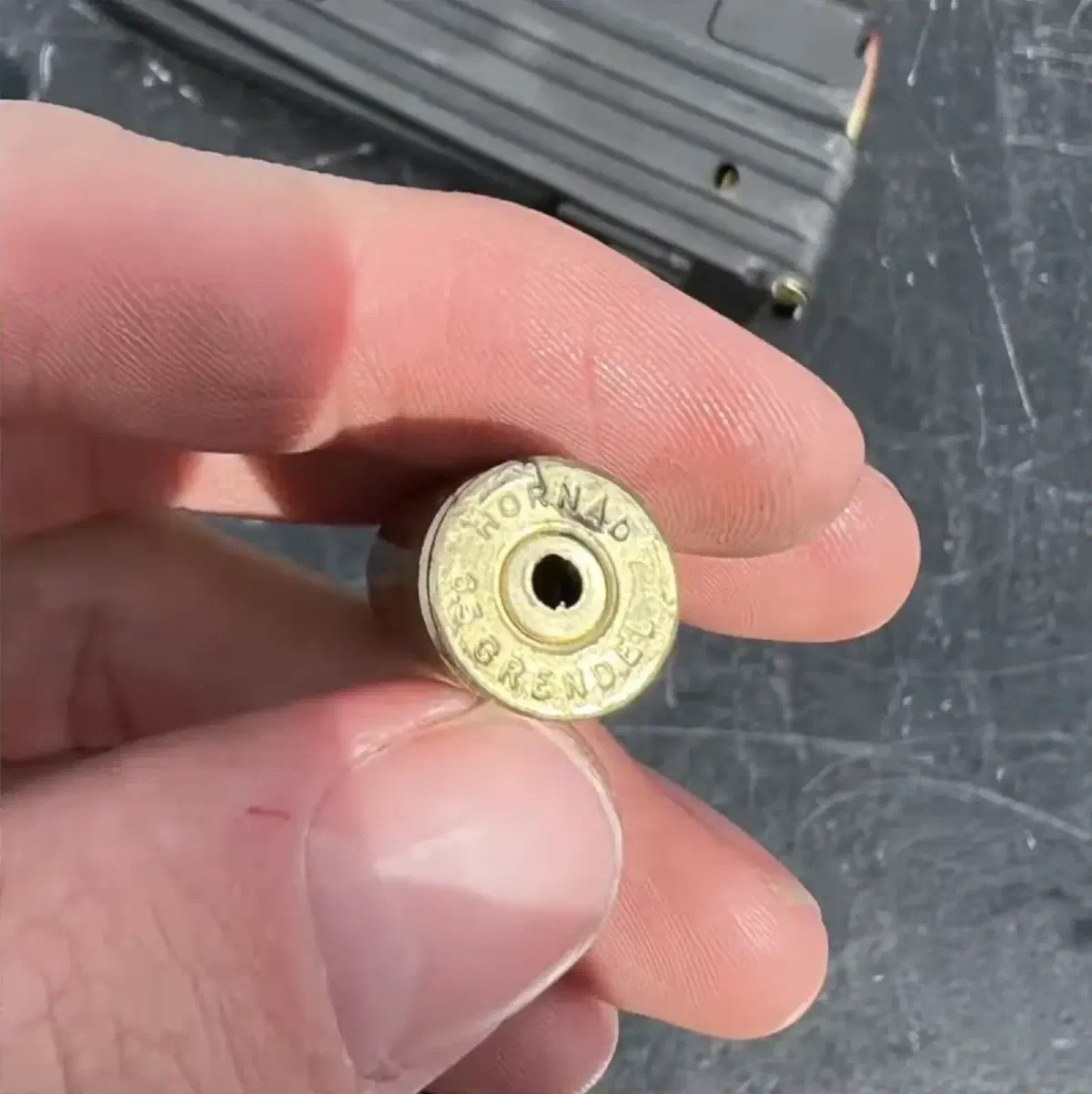
So how do we fix it? By remaking everything about the firing pin and how it works in the bolt. The firing pin is turned down to its new dimension and hand polished to create a smooth, perfectly spherical end that won’t cut into soft primers. It is given a new shoulder and spring as an additional safety factor to prevent inadvertent impact on the primer and discharge when closing the bolt or dropping the rifle (an unlikely scenario, and not one that ever came up in development, but a safety concern in all systems using heavy, free-floating firing pins and very soft primers, which some commercial 6.5G uses). The bolt face is welded closed, and subsequently faced to its original dimension. The firing pin hole and channel are then redrilled, and the rear of the bolt counterbored to create a new spring seat. 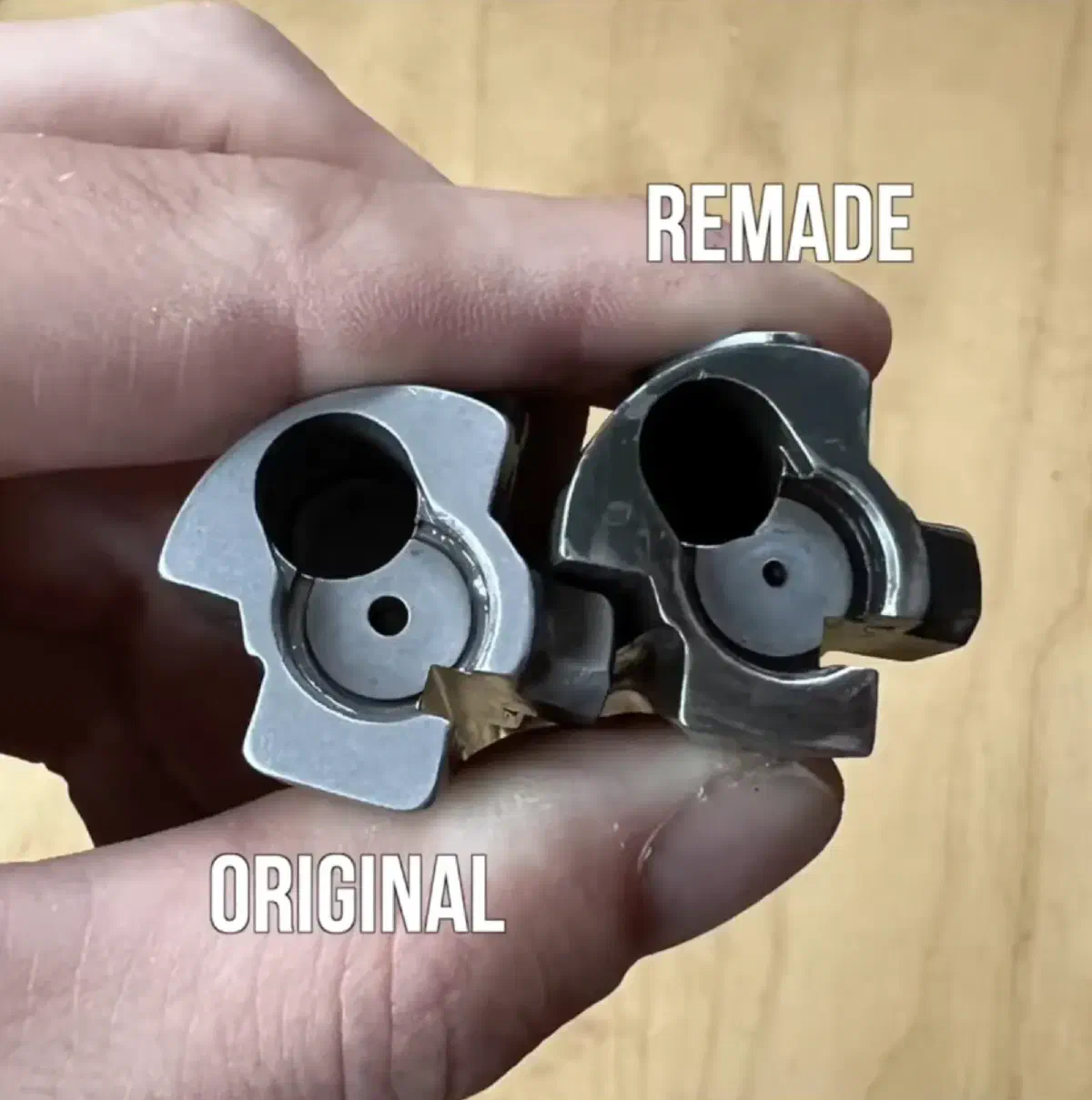
The bolt is then assembled into the rifle, headspaced to the minimum allowable spec, and lapped into its final fit.
MAGAZINE
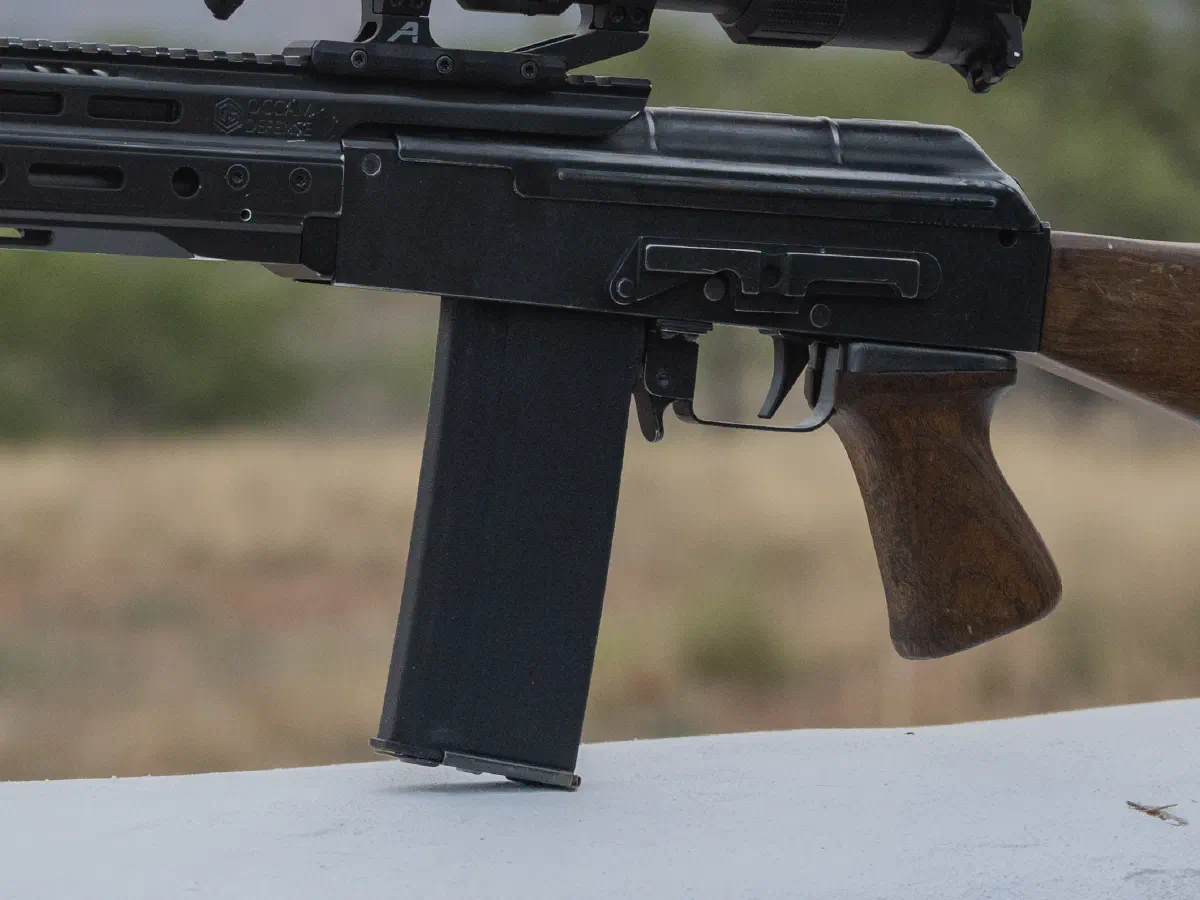
The magazine actually can have a significant effect on accuracy–the consistency with which rounds end up in the chamber is key here, as is any distortion or marring of the brass. Inconsistent or violent feeding can result in the appearance of two separate groups, one for left-fed rounds and one for right-fed rounds, as well as other accuracy issues. An observation of the brass cases after being fed through the CSspec magazines clearly shows that something is very inadequate about this design. You can see that the very sharp shoulder does not gently guide brass into the chamber, but mashes it in without any concern for geometry. 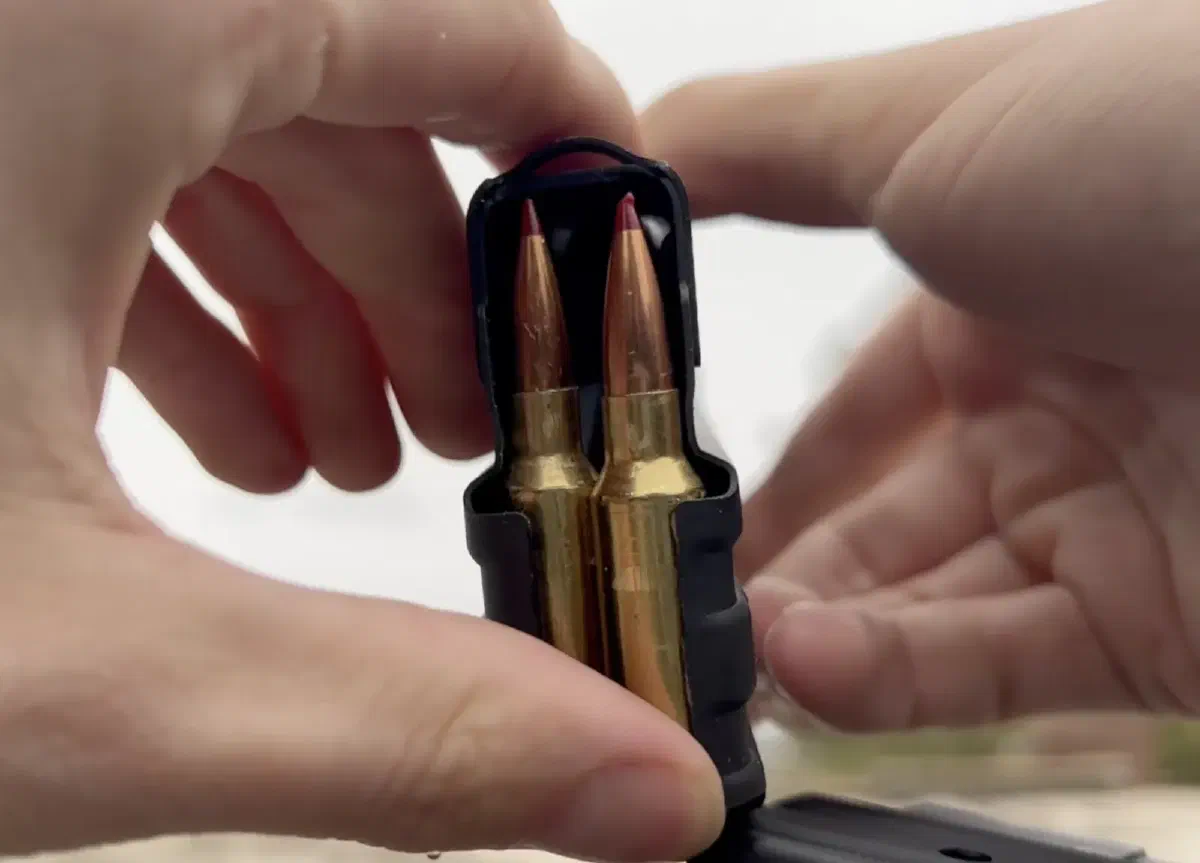
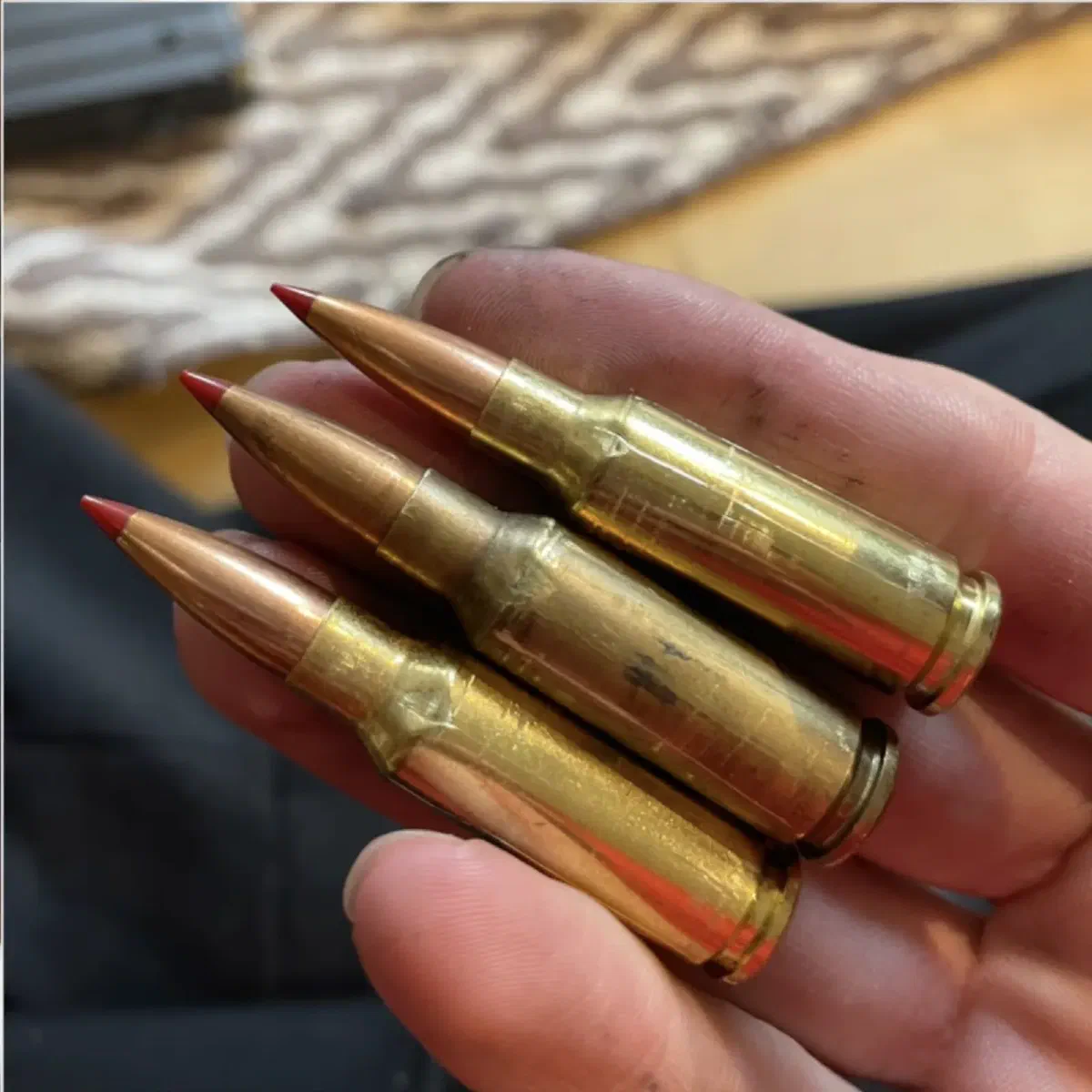 I have two solutions:
Modified CSspec magazines:
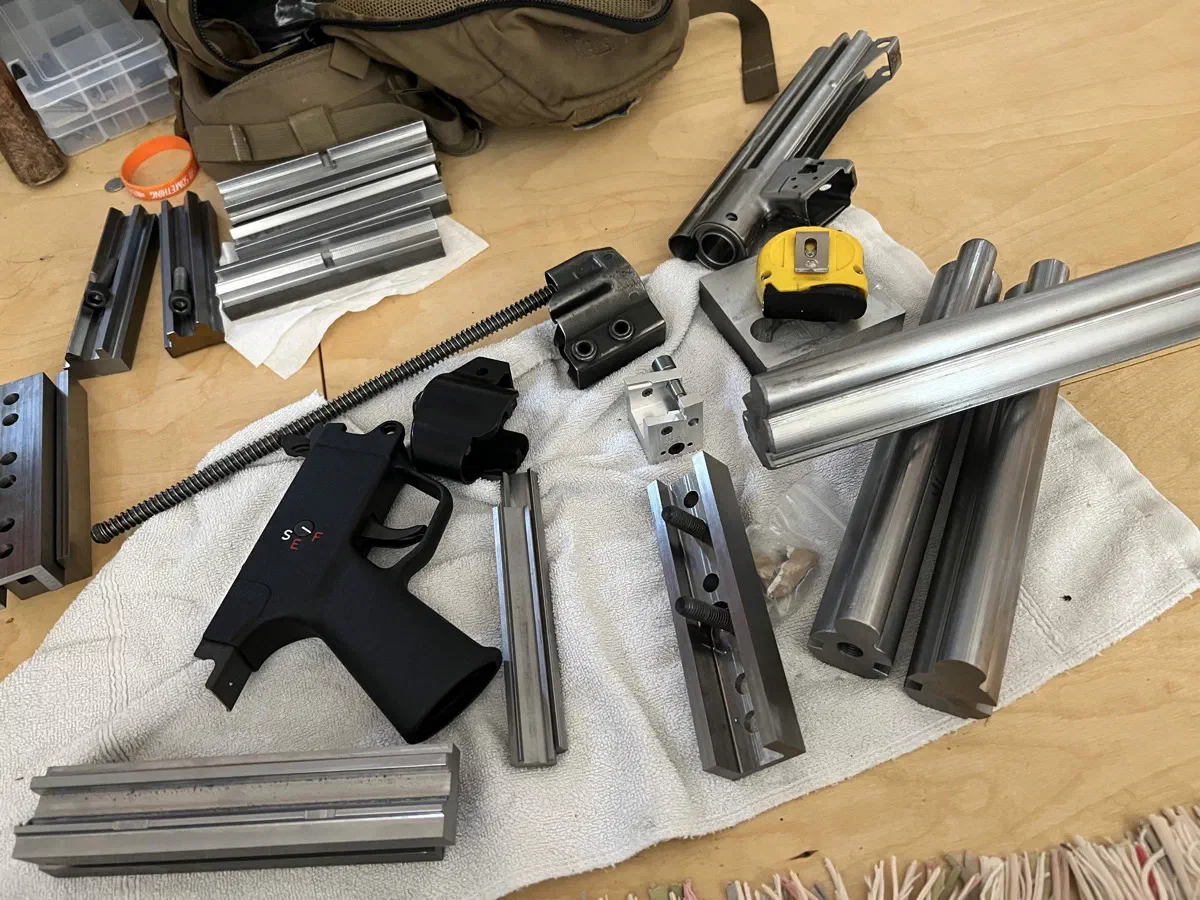
These magazines are unboxed, torn down and immediately put into a specialized set of dies that I built for this purpose. Heat is applied narrowly to the the shoulder I note above to slightly anneal it and ensure no cracking of the heat-treated metal occurs, without affecting feed lips, locking lugs, or nose. This shoulder is reformed into more of a ramp. The internals are stripped out and replaced with an AR-15 PMAG spring, with matching Carbon-nylon floor plate and follower. 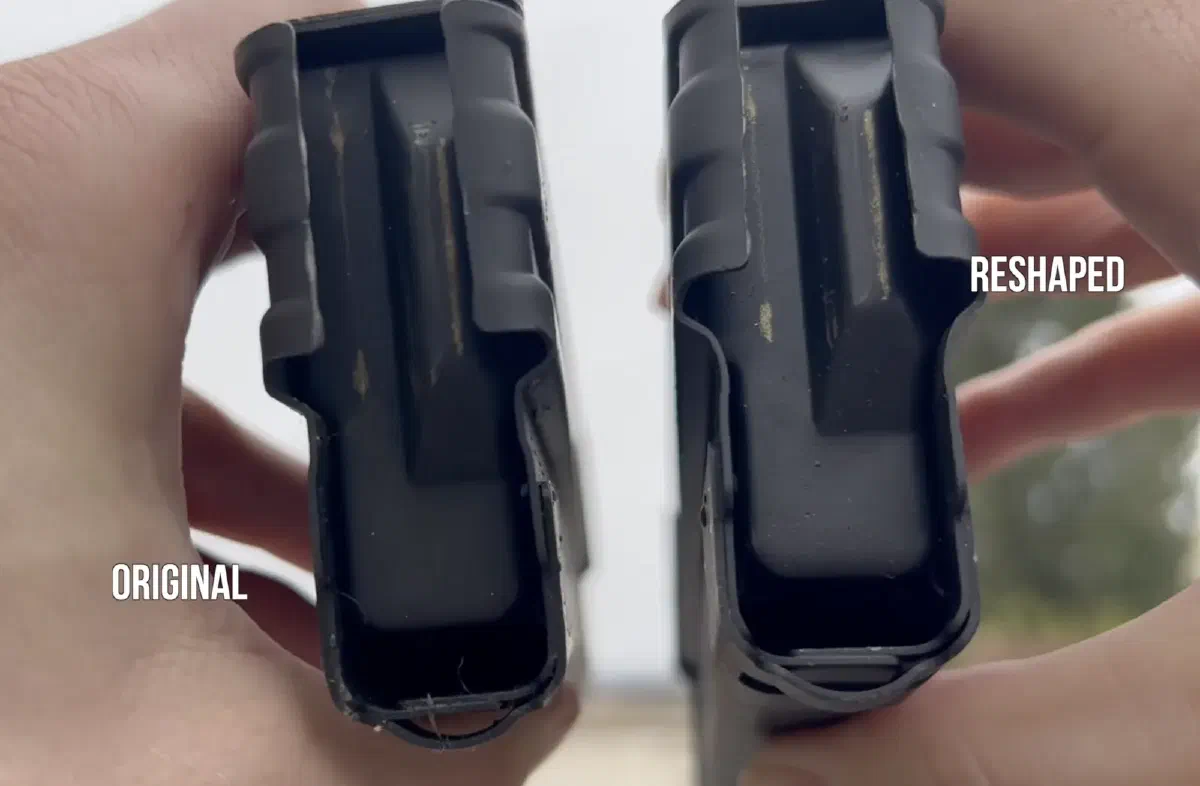
3D-printed carbon-nylon magazines: 3D printed magazines? Yes! I still don’t consider these a production option due to the unsolvable weakness of the feed lips. Until I develop new techniques for increasing cross-linking across layers, these will remain internal prototypes only. These magazines were developed from the ground-up to go into 6.5 Grendel AKs, and have perfect feed geometry for this weapon system. Just like the clear Polish magazines, these still aren’t mil-spec, and won’t hold up the same way as spring steel, or proper injection-molded fiber-reinforced nylon. I use my nylon magazines for precision work when I want to guarantee rounds in the chamber in the gentlest way, and the steel bodied mags for applications where durability might be a concern.
FOREEND
I use Occam Defense’s free float handguard. Unlike other systems which simply use clamping force to attach the handguard to the barrel, this handguard is rigidly pinned to the barrel using a 1/8" dowel pin, like the original AK barrel components. This handguard is never going to move, and stays very close to its zero when removed and replaced. These handhguards have a secondary rigid member forming the gas tube which can be used to further damp barrel whip and increase accuracy. While technically not a fully free-floated system (no long-stroke piston can be truly, fully free-floated), this additional rigid member increases accuracy and is not measurably impacted by forces applied to the handguard.
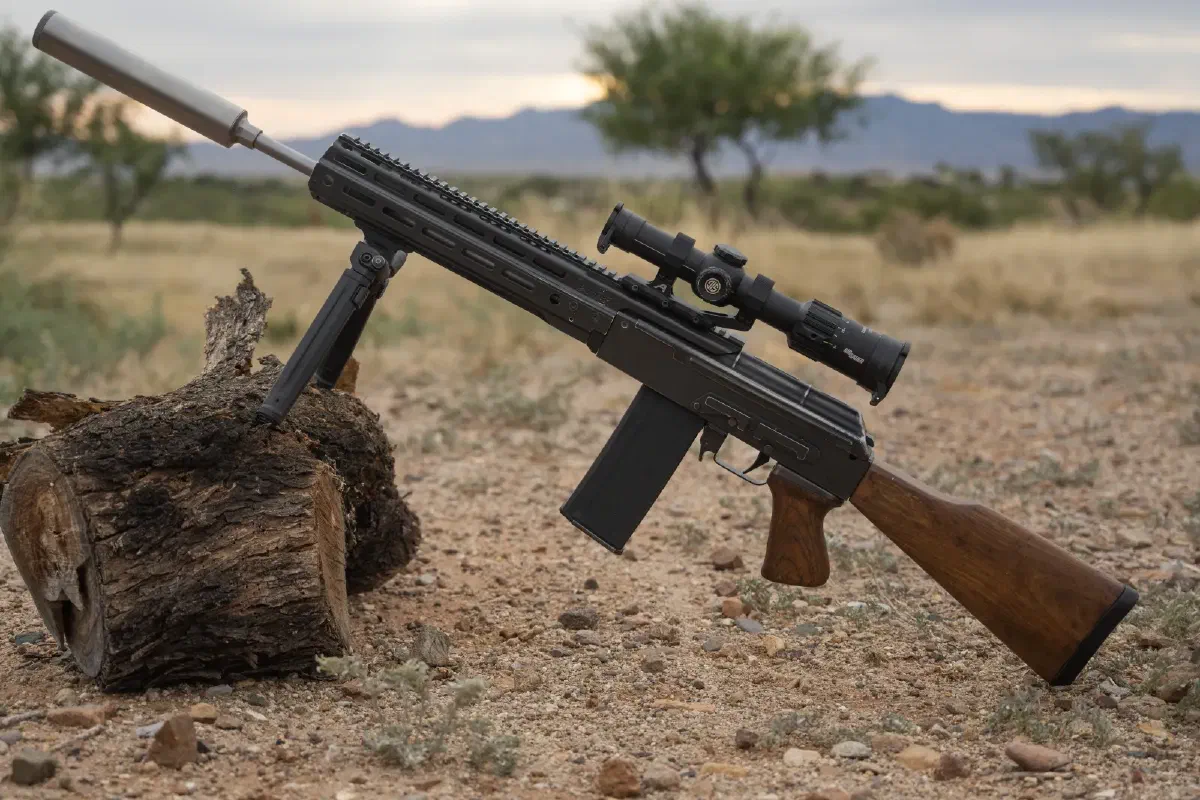
Gas block: the gas block is either a Definitive Arms adjustable gas block, or Occam defense adjustable gas block. DA’s 11-position block requires the user to remove the handguard to adjust gas, and is not something intended to be completed in the field. Occam Defense’s gas block is quick-adjust, and flow can be easily restricted or increased in the field. It is implicit that all of my rifles feature adjustable gas systems, and are fully suppressor-ready.
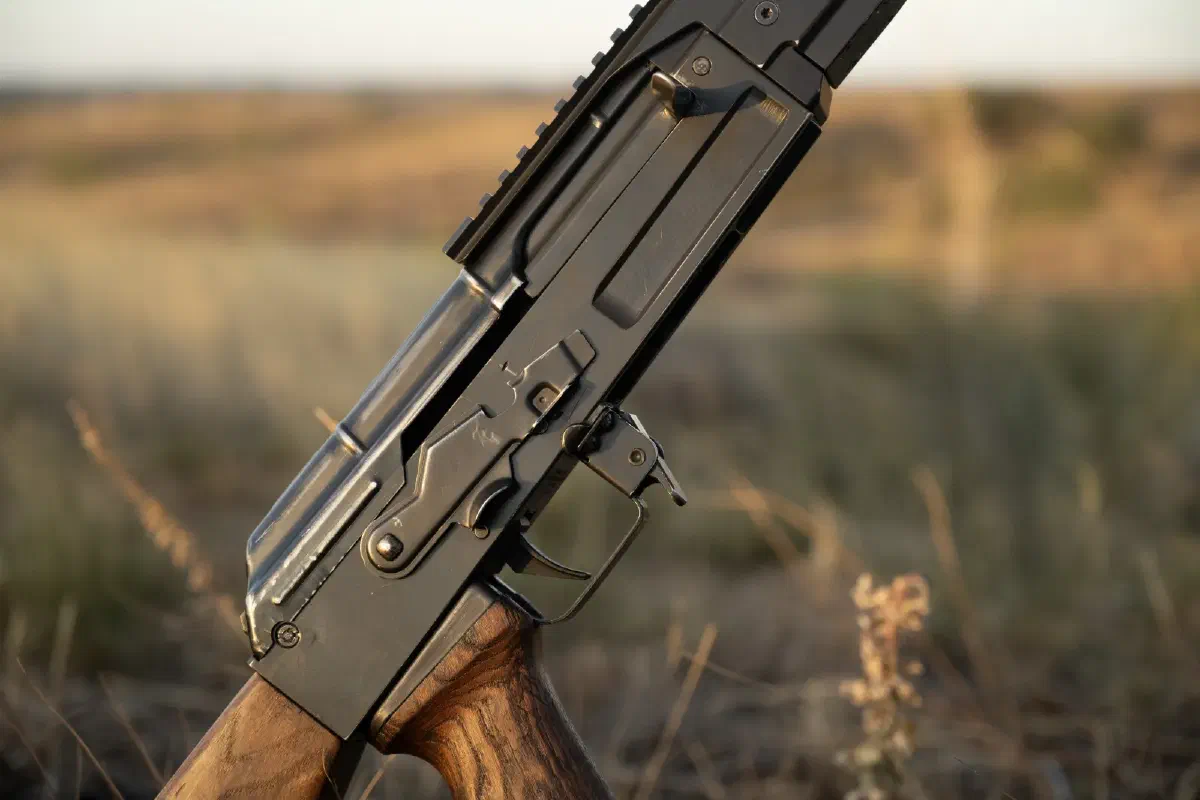
RECEIVER
I typically use milled receivers. The added rigidity provides accuracy benefits to an inherently very floppy and wobbly design. In slow motion, you can observe that the AK is much more flaccid than ARs are–the open U-shape receiver design is the biggest culprit here, and the added thickness of the milled receiver really helps. I do provide a secondary optics rail upon request; the Occam forehand doubles as your optics mount, but an additional side rail with a custom rear-biased dogleg rail can provide a secondary option for magnifiers. I’ve yet to encounter a real use-case for the side rail, but, hey, free extra rigidity!

USER PARAMETERS
I build these to your specification and use-case. If you want a lightweight carbine, we can do that! If you want to push the limits of accuracy in the AK platform and weight is no object, we can also do that. If you want a 6.5 AK, but also want a battle rifle…well, I do also make 6.5 Creedmoor AKs–just ask.